Agriculture · Multi-Vendor AgriTech Platform
AgriProduct
A role-based agriculture marketplace where farmers buy trusted supplies, get AI crop diagnosis and Urdu voice advice, and shopkeepers run a full online store, all verified by an admin approval workflow.

Challenge
AgriProduct needed to serve two very different groups at once: farmers looking for real advice and trusted supplies, and shopkeepers trying to sell agricultural products online. Most farmers also don't have easy access to expert advice on crop diseases, pests, or weather timing, and language is often a barrier since many prefer Urdu over English. On top of that, the platform needed a way to keep the marketplace trustworthy, since anyone could otherwise list a fake product or run an unreliable shop with no oversight.
Solution
I built AgriProduct with Next.js and MongoDB as a role-based platform: farmers, shopkeepers, and admins each get their own dashboard. Farmers can buy products, ask an AI assistant questions in English or Urdu, and upload a photo of a crop to get an instant health check. Shopkeepers get a full store manager with sales analytics and inventory tracking, and admins approve new shops, manage users, and resolve complaints before problems reach the wider marketplace.
Project Overview
AgriProduct is an online marketplace built for the agriculture industry. The platform connects farmers with agricultural shops where they can browse and buy products such as seeds, fertilizers, tools, and farming equipment.
But the project wasn't only about selling products.
I also wanted farmers to have useful tools alongside the marketplace, so I added AI-based crop and pest analysis, weather information, farming recommendations, and an AI chat assistant that supports both English and Urdu.
The platform has three main user types: farmers, shopkeepers, and admins. Each one has a different dashboard and a different set of tools based on what they actually need to do.
One Platform For Farmers And Shops
The main marketplace allows farmers to browse products from different shops, check prices, view product details, and place orders.
The homepage focuses on the main things the platform provides: agricultural products, verified sellers, AI-based assistance, and an experience that doesn't feel complicated for someone who isn't used to working with online platforms.
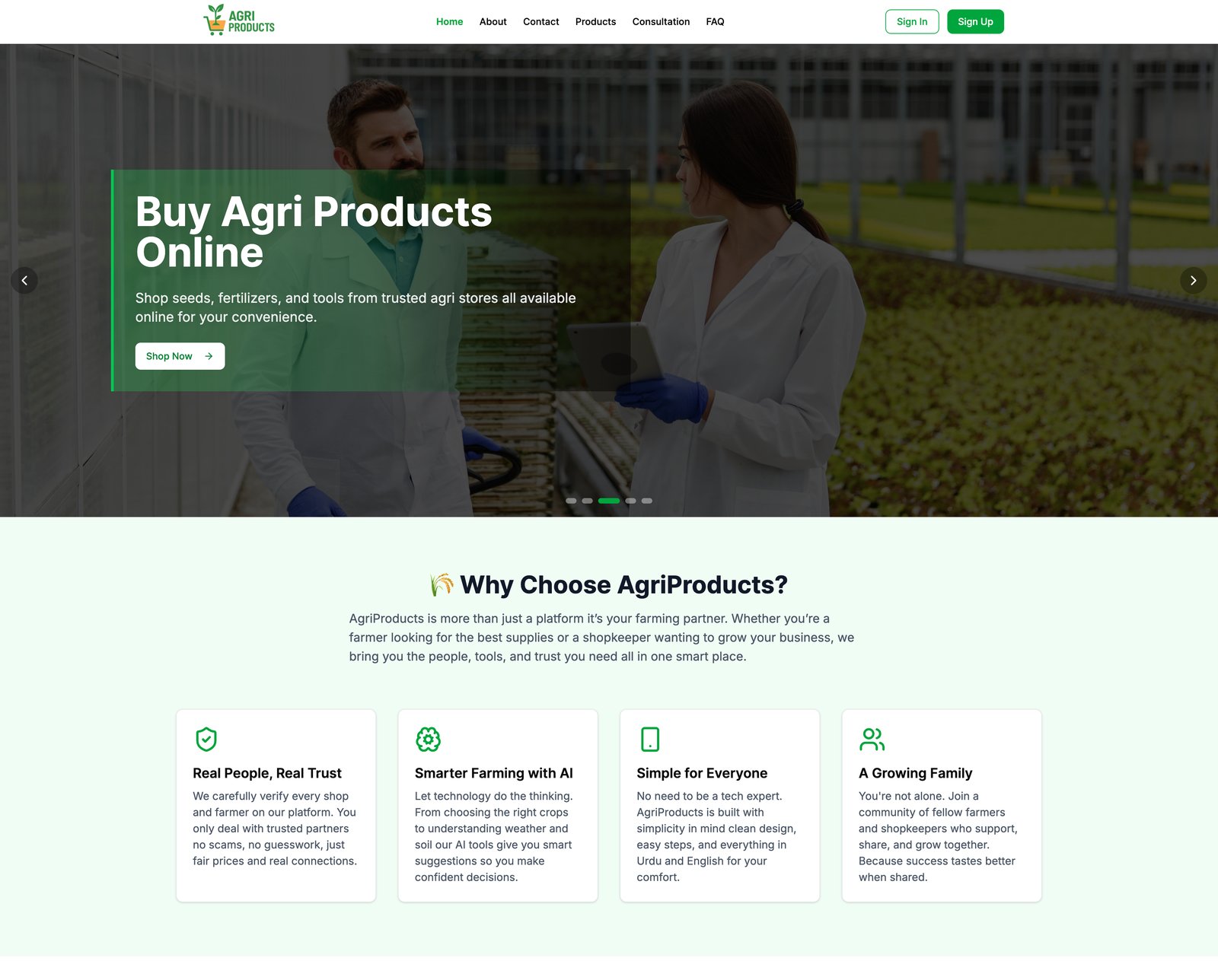
Product listings include real pricing in PKR and cover different categories such as seeds, fertilizers, tools, and larger farming equipment.
I also added seasonal farming tips and platform information to make the homepage more useful instead of treating it as just a product catalog.
AI Tools For Everyday Farming Problems
One of the more interesting parts of AgriProduct is the AI consultation section.
Farmers can use the platform for three main types of assistance:
- Crop disease detection
- Pest detection and control
- Weather-based farming advice
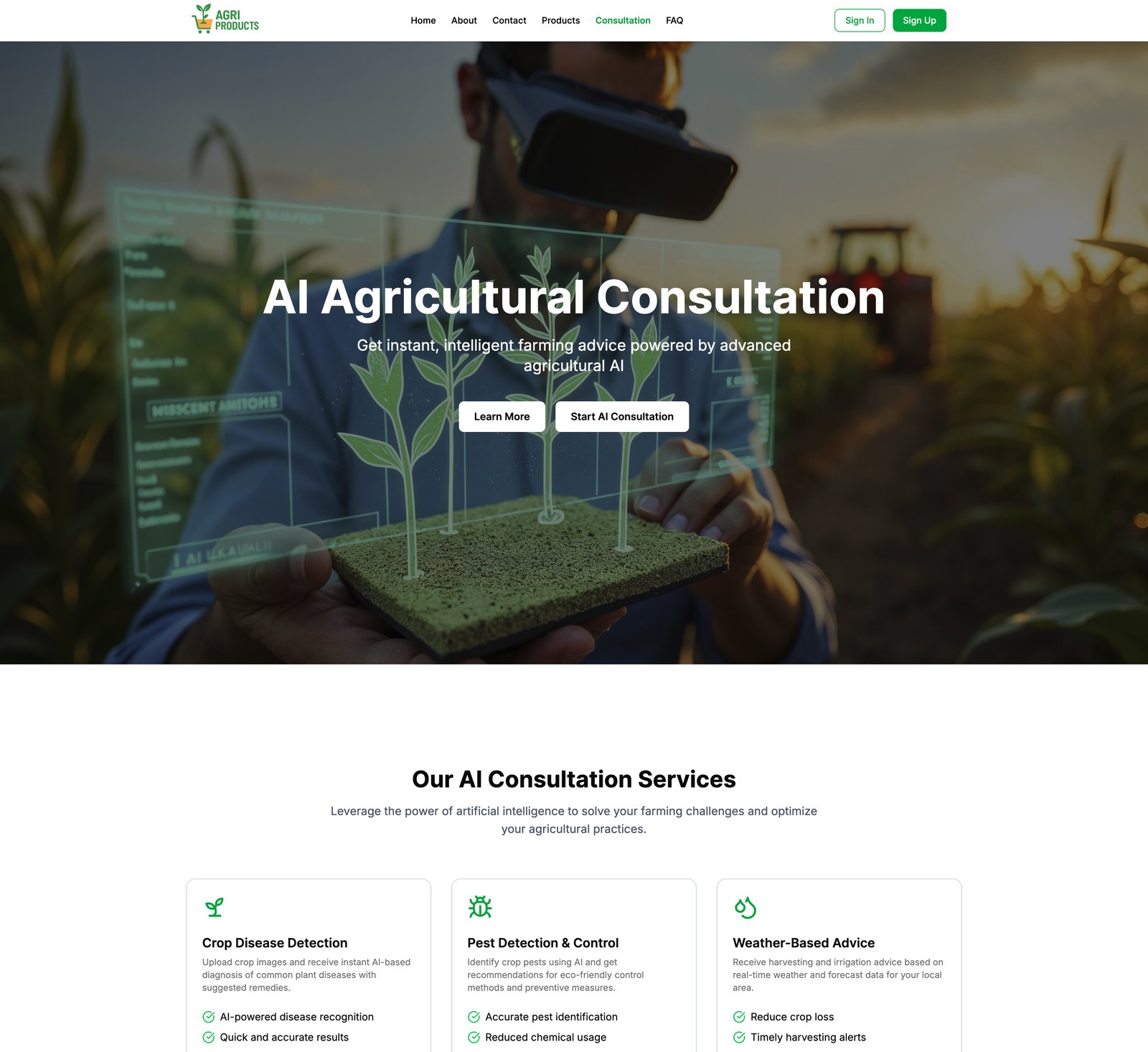
For crop and pest detection, the farmer can provide an image and get an AI-generated analysis. The weather-based feature uses local weather information to provide suggestions related to things like irrigation and harvesting.
I kept the interface simple because the person using the feature shouldn't have to understand how the AI works. They just provide the information and get the result.
AI Assistant With Urdu Support
I also added a floating AI assistant that farmers can access from different parts of the application.
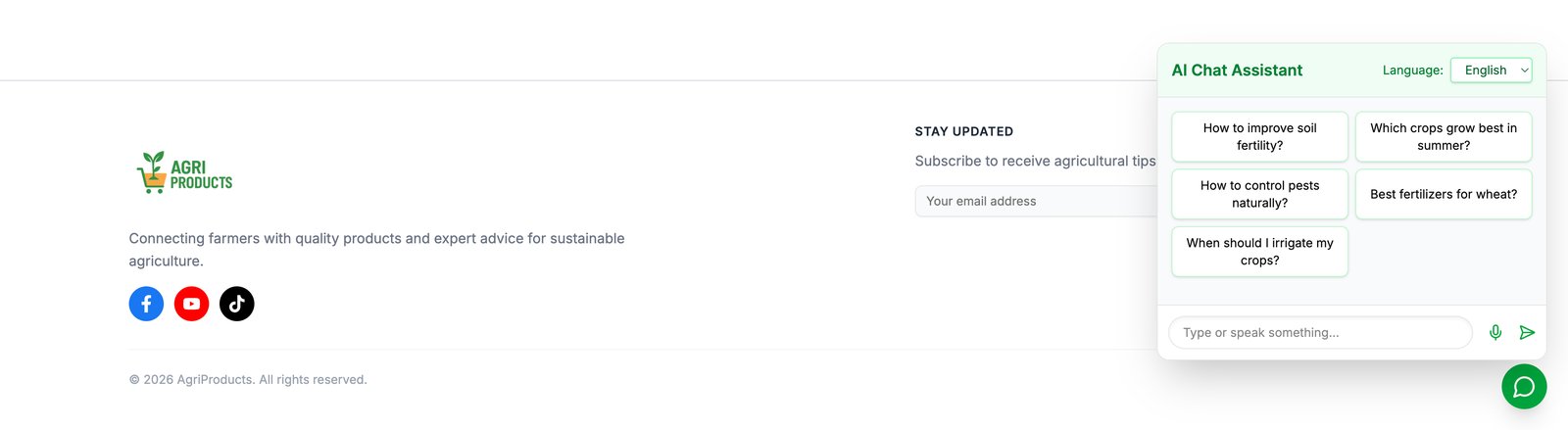
The assistant includes common questions to help users get started and supports both text and voice input.
There is also a language option for Urdu and English.
For this project, language support was important. A farming assistant is not very useful if the person using it struggles to understand the language or terminology, so I wanted the interaction to feel as straightforward as possible.
Farmer Dashboard
After logging in, farmers get a dashboard where they can quickly see their orders, weather information, complaints, and useful shortcuts.
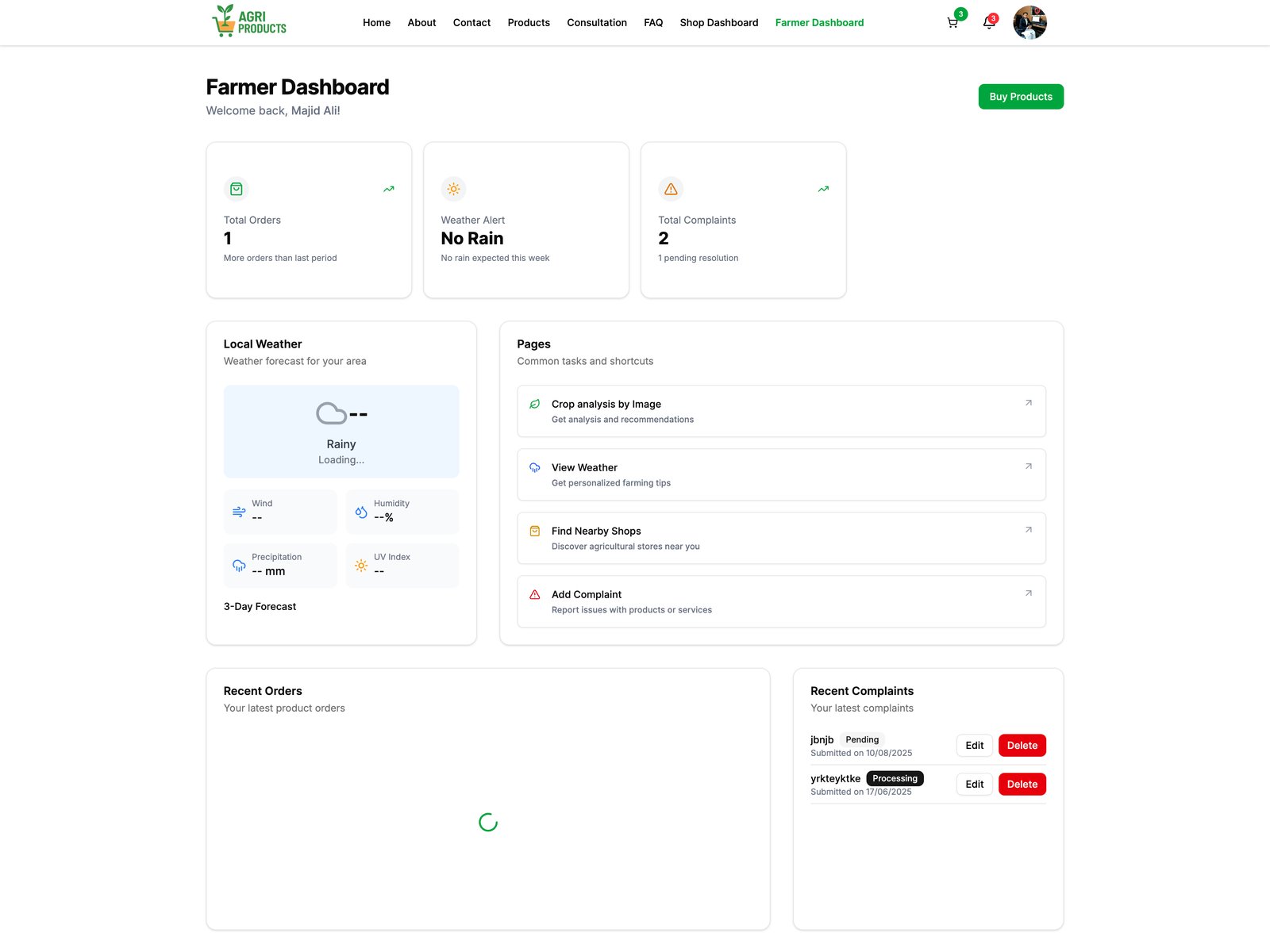
The weather section includes details such as temperature, wind, humidity, precipitation, and UV index.
I also kept the main actions visible on the dashboard, including crop analysis, weather, nearby shops, and complaints, so users don't have to search through the application every time they need one of these features.
Shopkeeper Dashboard
The shopkeeper side works more like a small business management system.
Shopkeepers can see their sales, orders, customers, and total products from the dashboard. They can also check recent orders, monitor inventory, and see sales trends.
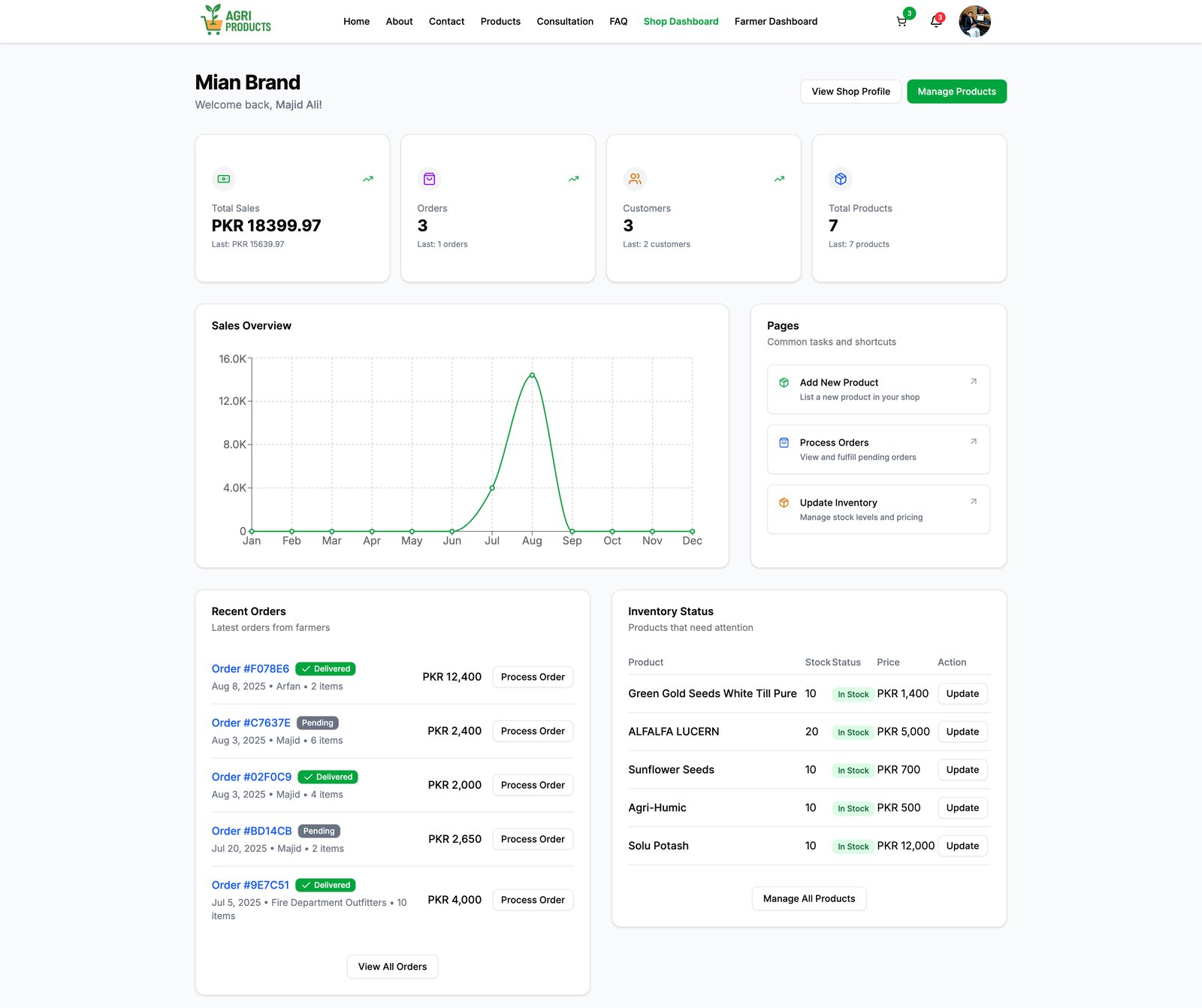
Instead of giving shopkeepers a basic form to upload products and leaving everything else to them, I built the dashboard around the tasks they need to handle regularly.
Orders can be managed from the same area, while inventory information helps them keep track of stock and pricing.
Adding Products
The product creation flow is divided into separate sections so shopkeepers don't have to deal with one huge form.
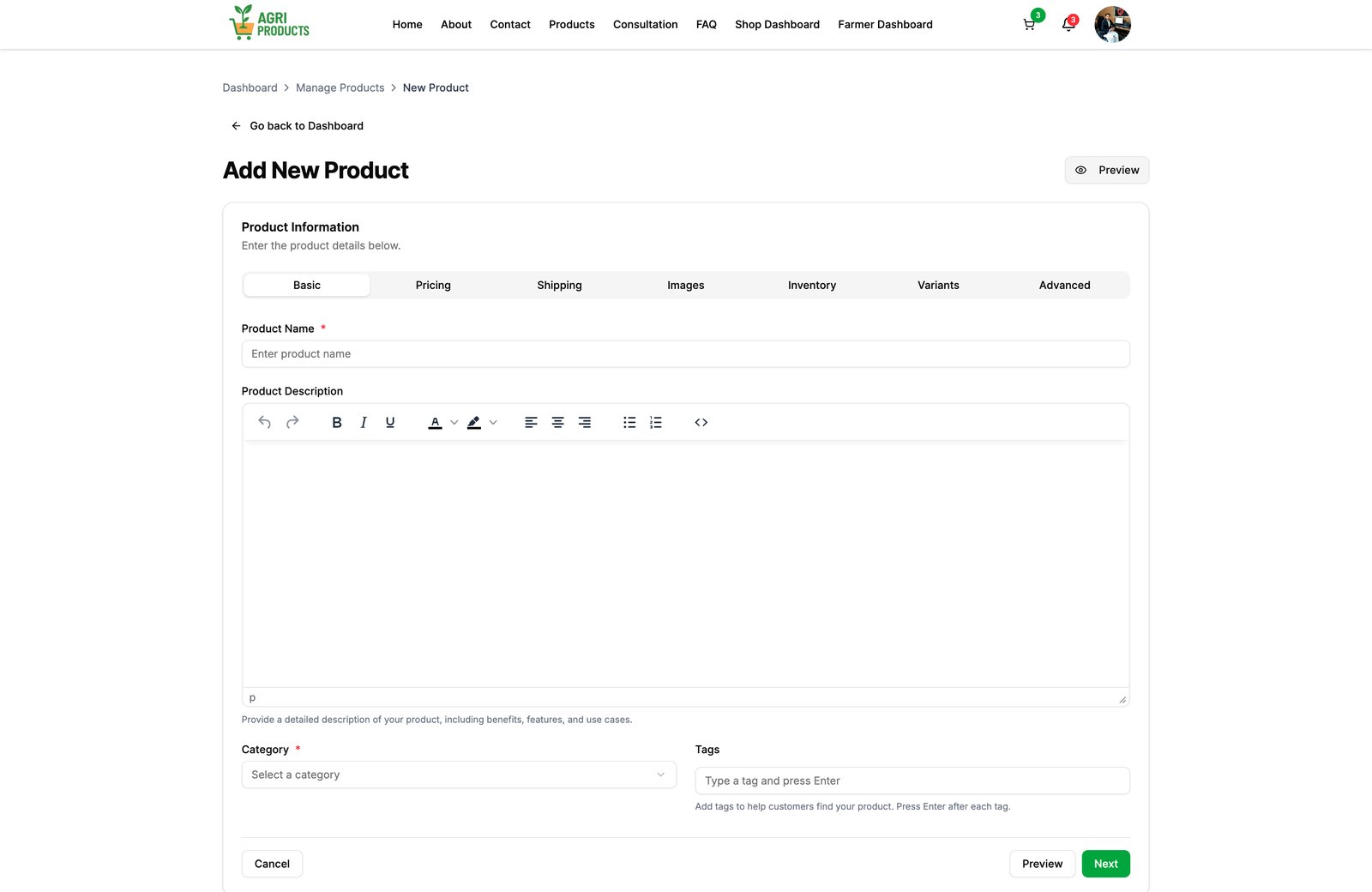
The form covers:
- Basic information
- Pricing
- Shipping
- Images
- Inventory
- Variants
- Advanced settings
I also added a rich text editor for product descriptions.
This makes the product management side flexible enough for different types of agricultural products rather than limiting the shopkeeper to a very basic listing form.
Admin Controls
The admin side is responsible for keeping the marketplace organized and dealing with issues across the platform.
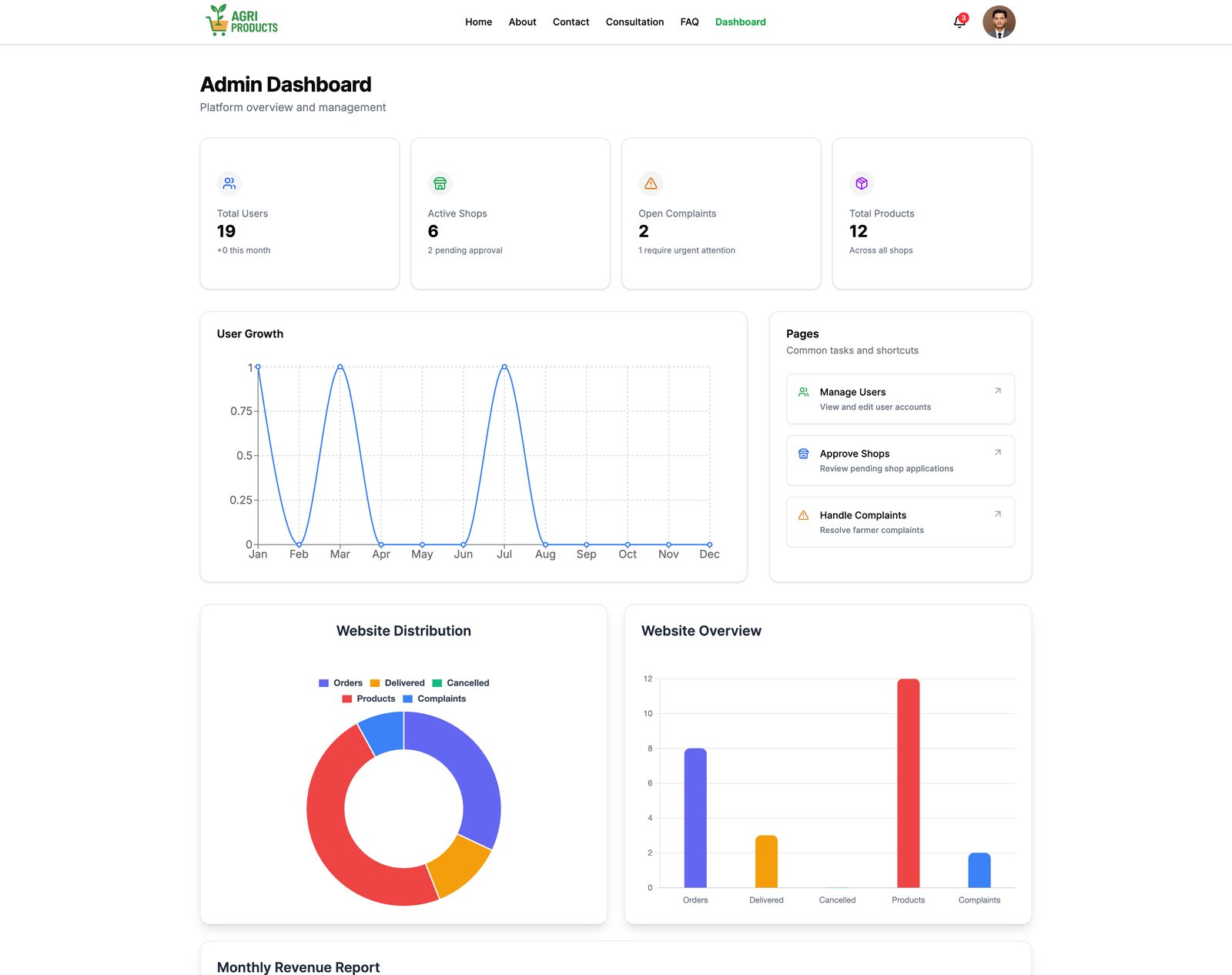
Admins can monitor users, shops, products, orders, and complaints from one dashboard. I also added charts for things like user growth, order activity, and shop registrations to make the overall platform easier to monitor.
Shop Verification
Since shopkeepers can register their own stores, I didn't want every new shop to become publicly available immediately.
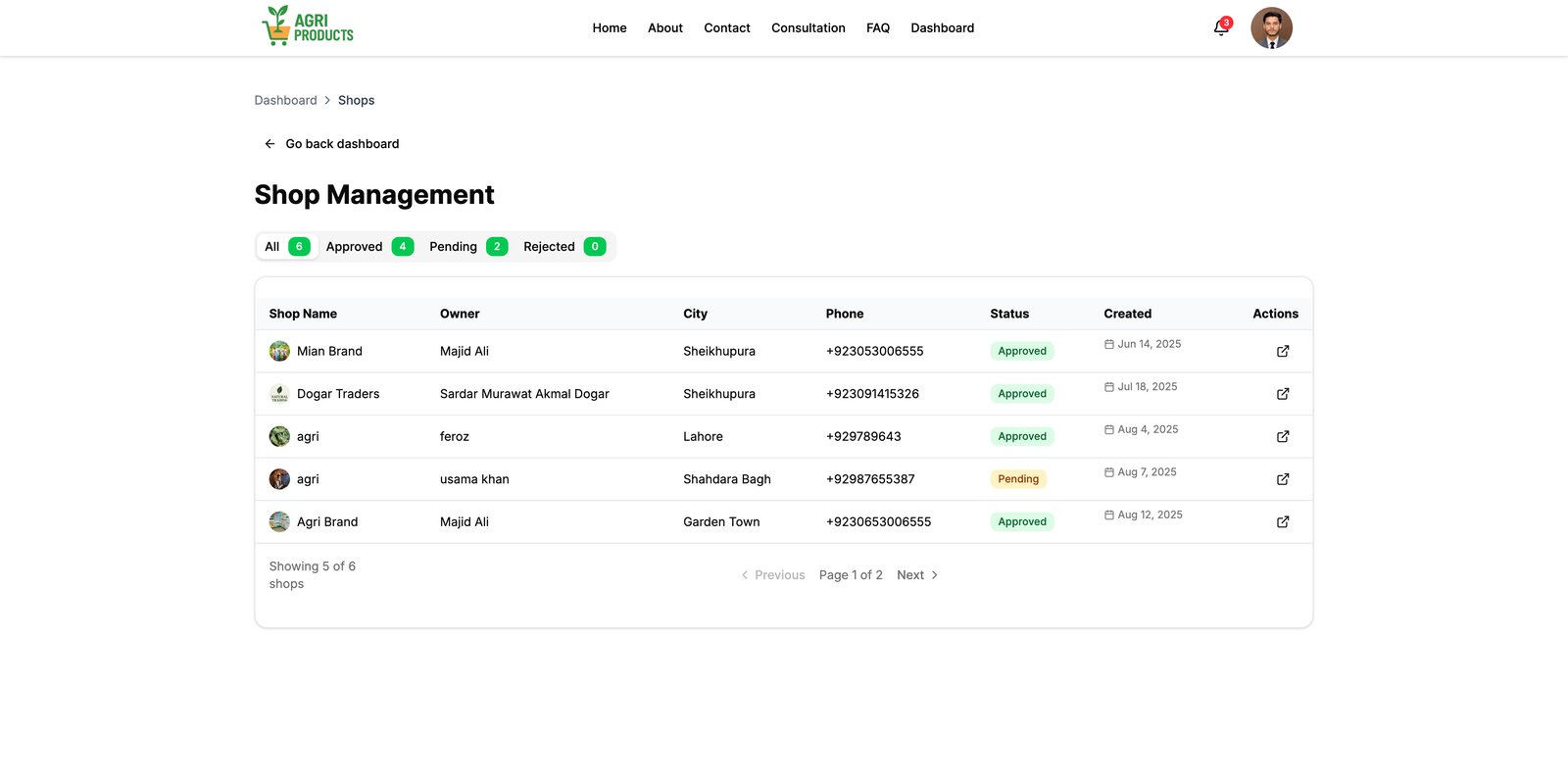
Admins can review shop applications and see details such as the shop owner, location, and contact information before approving or rejecting a shop.
Shop applications can be filtered by status, including pending, approved, and rejected.
This gives the platform a basic verification process instead of allowing anyone to immediately start selling.
Complaints Management
Farmers can also submit complaints through the platform, and admins can manage them from the admin dashboard.
Complaints have different severity levels and move through statuses such as pending, processing, resolved, and rejected.
This gives admins a clear way to follow up on problems rather than having complaints disappear into an inbox with no proper tracking.
Three Different Experiences
Although everything runs inside one application, the experience is different depending on the user's role.
Farmers can:
- Browse and purchase products
- Check nearby shops
- Use AI crop and pest analysis
- Ask the AI assistant for farming advice
- Check weather information
- Manage orders
- Submit complaints
Shopkeepers can:
- Manage their store
- Add and update products
- Track orders
- Monitor inventory
- View sales information
- Manage customers
Admins can:
- Manage users
- Review and approve shops
- Monitor products and orders
- Handle complaints
- Monitor overall platform activity
Keeping these experiences separate helped me avoid turning the application into one large dashboard full of features that don't apply to everyone.
The Result
AgriProduct brings the marketplace and farming assistance into the same platform.
A farmer can come to the website to buy a product, check the weather, analyze a crop problem, or ask the AI assistant for advice. A shopkeeper gets the tools needed to actually run their store, while admins have control over users, shops, products, and complaints.
From the development side, the main challenge was making all three sides work together while keeping their individual experiences simple.
I built the application with Next.js and MongoDB, with the different role-based dashboards, e-commerce functionality, AI features, weather integration, and admin controls working together as one system.
Tech Stack
- Frontend: Next.js, React, Tailwind CSS, Framer Motion
- Backend: Next.js API Routes
- Database: MongoDB
- AI: Google Gemini, OpenRouter
- Weather: OpenWeatherMap
- Location: Radar API, Nominatim
- Features: Multi-vendor marketplace, AI crop analysis, AI assistant, weather data, role-based dashboards
Results
- Built three separate role-based dashboards (Farmer, Shopkeeper, Admin) instead of one generic account type for everyone.
- Added an AI crop analysis tool that turns an uploaded photo into a disease and pest diagnosis with suggested remedies.
- Built an AI chat assistant that answers farming questions with voice input support in both English and Urdu.
- Gave shopkeepers a full sales dashboard with revenue charts, order processing, and low-stock inventory alerts.
- Built an admin approval workflow for new shops, so every seller on the platform is manually verified before going live.
- Added a complaints system with severity levels and status tracking, giving farmers a direct way to flag problems.
- Connected the platform to live weather data, so farmers get local forecasts and harvesting alerts on their dashboard.