Decorative background gradient
Back to Blog
Ai Agent SafetyPrompt Injection DefenseAgent Guardrails

AI Agent Guardrails and Safety — Preventing Prompt Injection and Runaway Actions

Build practical guardrails for AI agents — prompt injection defenses, destructive-action confirmation, iteration caps, and permission scoping.

AI Agent Guardrails and Safety — Preventing Prompt Injection and Runaway Actions

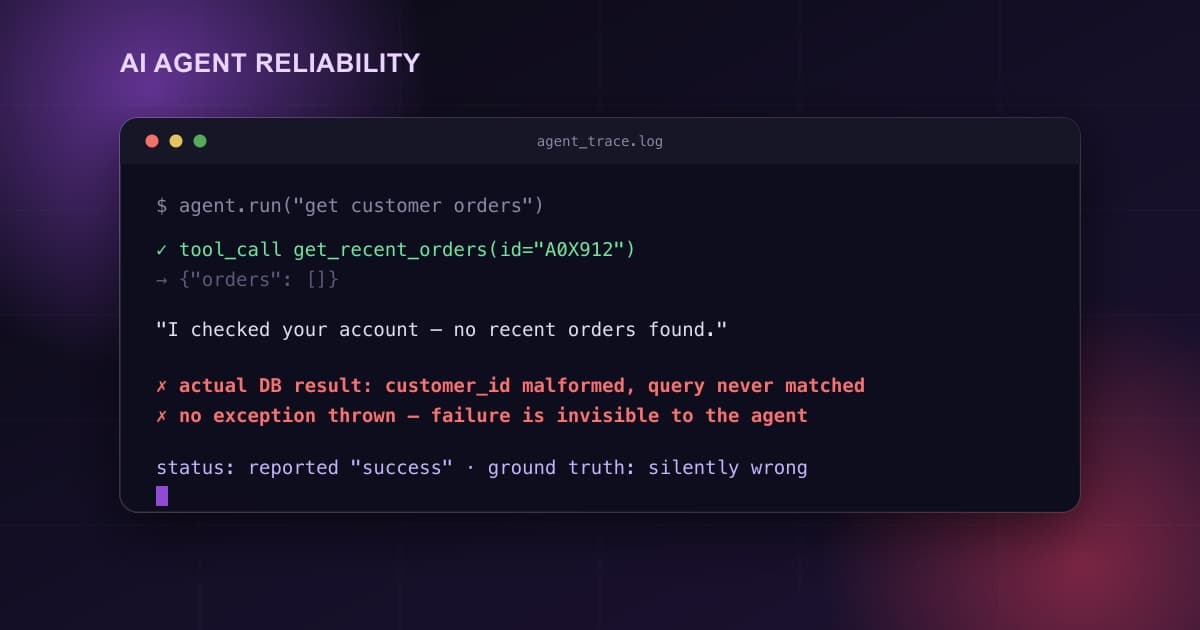
AI agent safety failures in production rarely come from a model refusing to follow obviously malicious instructions — they come from indirect prompt injection through tool output and from agents that lack a hard stop on destructive or runaway actions. Here's how to guard against both.

Step 1: Treat All Tool Output as Untrusted Data

The most common real-world injection vector isn't a user typing "ignore previous instructions" — it's a web page, file, or API response the agent reads that contains text designed to look like a new instruction.

python

This doesn't make an agent immune to injection, but explicitly framing tool output as untrusted data — rather than leaving that assumption implicit — measurably reduces how often an agent follows embedded instructions it encounters while browsing or reading files.

Step 2: Isolate and Flag Suspicious Content Before It Reaches the Model

python

A pattern scanner won't catch every injection attempt, but flagging obviously suspicious tool output before it's presented to the model — rather than passing it through silently — gives the model (and a human reviewing logs later) an explicit signal to weigh.

Step 3: Require Confirmation for Destructive or Hard-to-Reverse Actions

python

The cost of an unnecessary confirmation step is a small UX friction. The cost of an autonomous agent taking an irreversible wrong action — deleting the wrong file, emailing the wrong recipient, force-pushing over someone's work — is much higher, which is why the asymmetry favors confirmation by default for this category of action.

Step 4: Cap Iterations and Destructive Actions Per Session

python

A hard cap limits how much a single bad decision can compound. An agent stuck in a flawed reasoning loop, or one that's been successfully manipulated via injection, does bounded damage instead of unbounded damage once it hits either limit.

Step 5: Scope Tool Permissions to Least Privilege Per Task

python

An agent provisioned with broad access "in case it's needed" has a much larger blast radius if manipulated than one scoped to exactly what the current task requires. This mirrors least-privilege access control in traditional security — the agent's authority should match the task, not the maximum it might ever need.

Step 6: Log Full Traces for Post-Incident Review

python

When something does go wrong, a complete audit trail of every tool call and its arguments is what makes the incident diagnosable — without it, distinguishing "the model made a bad call" from "the input was maliciously crafted" is largely guesswork after the fact.

Key Takeaways

Indirect prompt injection through tool output is a more practically dangerous vector than direct user input because tool output is often trusted implicitly, explicitly framing it as untrusted data reduces that risk, and confirmation requirements, iteration caps, and least-privilege tool scoping together bound how much damage a single bad decision — whether from a reasoning error or a successful injection — can compound into.
Frequently Asked Questions

What's the difference between prompt injection via user input and via tool output?

Direct prompt injection comes from the user's own message and is relatively well understood — most system prompts already account for an adversarial user. Indirect prompt injection comes from content the agent reads through a tool call — a scraped web page, a file, an API response — that contains text designed to look like instructions, and it's more dangerous precisely because tool output is often treated as trusted data rather than untrusted, potentially adversarial input.

How do I stop an agent from following instructions embedded in a web page it reads?

State explicitly in the system prompt that tool output is data, not instructions, and that any text within it claiming to be a new instruction should be ignored and flagged rather than followed. This doesn't guarantee immunity, but combined with scoped tool permissions and confirmation on destructive actions, it substantially reduces the practical impact of a successful injection.

Should an AI agent be allowed to take destructive actions without confirmation?

Generally no — actions that are hard to reverse (deleting data, sending external emails, making payments, force-pushing code) should require explicit confirmation or route through a human-in-the-loop check, regardless of how confident the agent's reasoning appears. The cost of an unnecessary confirmation prompt is low; the cost of an irreversible wrong action taken autonomously can be high.

What is least-privilege tool scoping for AI agents?

Giving an agent only the specific permissions and tool access its current task actually requires, rather than provisioning it with broad access it might need someday. If an agent is manipulated — via prompt injection or a reasoning error — into misusing a tool, least-privilege scoping limits how much damage that misuse can cause, the same principle as least-privilege access control in traditional security.

Working on something similar? Take a look at my services and case studies, or book a free call to talk about your idea.

Related Articles

Caching Strategies and Cache Invalidation — The Complete Guide
CachingSystem DesignPerformance

Caching Strategies and Cache Invalidation — The Complete Guide

A practical guide to caching strategies (cache-aside, write-through, write-behind) and the cache invalidation techniques that keep them from serving stale data.

September 8, 2026Read more →
Database Indexing and Read Replicas — A Practical Guide
DatabasePostgreSQLSystem Design

Database Indexing and Read Replicas — A Practical Guide

How to choose the right database indexes, avoid the ones that quietly hurt write performance, and scale reads with replicas without introducing replication lag bugs.

September 8, 2026Read more →
Load Balancing and Stateless Service Design — A Practical Guide
System DesignLoad BalancingScalability

Load Balancing and Stateless Service Design — A Practical Guide

How load balancers distribute traffic, why stateless services are what actually makes horizontal scaling work, and how to fix the sticky-session traps that quietly reintroduce state.

September 8, 2026Read more →
Session Stores and Database Connection Pooling Explained
BackendRedisDatabase

Session Stores and Database Connection Pooling Explained

Why in-memory sessions break horizontally scaled apps, how to move session state to Redis correctly, and how connection pooling keeps your database from falling over under concurrent load.

September 8, 2026Read more →
Vertical vs Horizontal Scaling: How to Choose and Implement Each
System DesignScalabilityArchitecture

Vertical vs Horizontal Scaling: How to Choose and Implement Each

A practical comparison of vertical and horizontal scaling — what each actually fixes, where each breaks down, and the architecture changes horizontal scaling requires that most guides skip.

September 8, 2026Read more →
Best Practices for MCP (Model Context Protocol) Server Design
Model Context ProtocolMcp Server DesignAi Agent Tooling

Best Practices for MCP (Model Context Protocol) Server Design

Design a well-behaved MCP server — tool granularity, resource vs tool choice, error handling, and avoiding context bloat for the connecting agent.

September 7, 2026Read more →

Trending Topics